:: Keynote Speeches


Prof. M.E. Hamedani Golshan

Professor of Isfahan University of Technology

hgolshan@iut.ac.ir


Title :  Distributed Automation Concept and Applications and its Impact on the Protective Relaying


Abstract:
Distribution Automation (DA) is part of the evolution of the distribution system toward smart electrical grid. Circuit reconfiguration, one of the most important DA applications, is done to prepare circuits for either a permanent or a temporary change to the distribution system in order to improve the operating condition of the system or to react to a system condition such as the fault situation and restore service to the maximum number of customers. Volt/Var Optimization (VVO) is another DA application that can automatically turn on/off voltage and VAR regulating devices at many points on the system. 
A system reconfiguration or a VVO scheme change the topology, line flows, and short circuit values. DA schemes, particularly those that reconfigure, change the distribution circuit or change circuit parameters, can affect protective relaying. These schemes can also impact the fault level contribution and direction, particularly for systems operating in loop mode or embedding DERs. The automatic reconfiguration or automatic voltage control may require new protection settings that can be pre-programmed as alternate setting group(s) and may also require protection equipment to support reversal in the direction of current and power flow from the normal direction. 
DA concept and applications and its impact on protective relaying protection system are briefly discussed in this presentation.
 

Dr. Hashem Mortazavi

CEO, Khayyam Power Generation Management Co.


Title:
Beautiful Models, Imperfect Data, Forgotten Reality, Rethinking Research Priorities in Power Grid Cybersecurity

Abstract: 

A close examination of recent literature on power grid cybersecurity highlights a persistent trend: a heavy reliance on abstract mathematical models and synthetic, noise-free datasets. While theoretically sound, these approaches often struggle to capture the chaotic dynamics and communication constraints—such as latency and jitter—inherent in real-world networks.
In contrast, field experience and technical reports from authoritative bodies like the DOE, CISA, and NERC paint a very different picture of the Operational Technology (OT) landscape. Forensic analysis of major incidents, including the Ukraine power grid attacks and the Aurora vulnerability, confirms that adversaries rarely rely on complex mathematics. Instead, they primarily exploit legacy protocols with no built-in authentication, take advantage of implicit trust within control networks, and weaponize human error—factors that academic models frequently overlook.
This lecture takes a problem-driven approach to identify three fundamental disconnects between academic outputs and industrial needs: the Model Gap, the Data Gap, and the Reality Gap. Beyond simply critiquing current methods, it proposes a framework to realign future research. The ultimate goal is to bridge the divide between 'elegant models' and 'operational realities,' ensuring that our scientific efforts truly enhance the cyber-physical resilience of critical infrastructure.
 

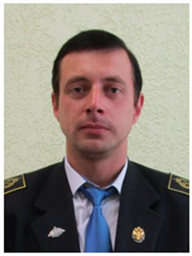
Prof. Yuri Anatolyevich Sychev

Professor of Empress Catherine II Saint-Petersburg Mining University

sychev_yua@pers.spmi.ru


Title:
THE AUTOMATED POWER QUALITY ENSURING IN THE COMBINED POWER SUPPLY SYSTEMS OF THE INDUSTRIAL ENTERPRISES BY MEANS OF THE FLEXIBLE MULTIFUNCTIONAL FILTER DEVICES


Abstract:
The relevance of the problem of the automated power quality ensuring and improving in the combined power supply systems of mineral resource enterprises with critical nonlinear process loads is proved. The article presents the main research results of the efficiency of the multifunctional filter device with several active converters of different types with flexible structure in the combined power supply system of mineral resource enterprises. The results of the authors' previous studies on this area are summarized and used as a basis, including the adopted activation sequence of the active converters within the multifunctional filter device, as well as the method of the non-sinusoidal mode creation where the device demonstrated maximum efficiency. The passive filter of the active-inductive-capacitive configuration is determined and proposed for installation at the output of the series converter within the multifunctional filter device to improve the latter's efficiency in the combined power supply systems with the significant voltage distortion levels from the power supply system. The mentioned filter also allows reducing the weight and dimensions of the multifunctional filter device by reducing the rated power of the series converter's output transformer. The dependences of the variation of the standardized and non-standardized power quality indicators were determined from the series converter's transformer rated power and the parameters of the passive filter at the series converter's output. The obtained results demonstrates that the installation of the passive active-inductive-capacitive filter of the proposed configuration at the output of the series converter as part of the multifunctional filter device for combined power supply systems is the efficient and reasonable. The main result of the presented research is the developed algorithm for the automated power quality ensuring and improving in the combined power supply systems with usage of the multifunctional filter device with several active converters of different types with flexible structure. 

Prof. Xingzhou Dong

Professor, Doctoral Supervisor, Department of Electrical Engineering, Tsinghua University

xzdong@tsinghua.edu.cn

Prof. Xingzhou Dong

Professor, Doctoral Supervisor, Department of Electrical Engineering, Tsinghua University

xzdong@tsinghua.edu.cn

In order to accept renewable energy generation, VCS HVDC power grid has been built in China. In order to clear the faults of VSC HVDC lines, ultra-high speed protection are necessary. The presentation introduced an ultra-high speed protection scheme based on travelling waves. At same time travelling waves differential based protection also has been introduced, which could be used as main or backup protection for LCC HVDC transmission line and VSC HVDC transmission line. Field operation results show that the travelling waves based protections are excellent protection technology.


Important Dates

Deadline for submission of original papers : 29 October 2025

Announcement of review results : 9 December 2025
Final paper submission deadline : 23 December 2025

Conference date : 6 January 2026

To Conference ...

-1 Days

Organizer

Sponsorship

Video news

1
2

Statistics